
Understanding roofing terminology makes it easier to read inspection notes, compare repair recommendations, and recognize early warning signs. For homeowners in Oswego, NY, a working knowledge of roof components is especially useful because heavy snow, wind, freeze-thaw cycles, rain, and ice can affect roofing materials in different ways.
What are the main parts of a roof?
A roof is a layered system, not just the visible shingles. Each part has a separate function, and damage in one area can eventually affect others.
- Decking: The structural surface attached to the roof framing. It is commonly made from plywood or oriented strand board and provides the base for underlayment and shingles.
- Roof framing: The rafters or trusses that support the decking and transfer the roof’s weight to the walls.
- Underlayment: A water-resistant layer installed over the decking and beneath the shingles. It provides secondary protection if water gets past the roof covering.
- Shingles or roof covering: The exposed material that sheds rain, snow, and sunlight. Asphalt shingles are common, but roofs may also use metal, slate, wood, or other materials.
- Flashing: Thin pieces of metal or another durable material installed around openings, edges, walls, and changes in roof direction to help prevent water intrusion.
- Drip edge: Metal trim installed along roof edges. It directs runoff away from the decking and helps protect the edge of the roof from moisture.
- Eaves: The lower edges of a sloped roof that extend beyond exterior walls.
- Rake: The sloped edge of a roof at the end of a gable.
- Ridge: The highest horizontal line where two sloping roof surfaces meet.
- Valley: The inside angle where two roof sections meet. Valleys carry a large amount of runoff and need careful water-shedding details.
These terms often appear in inspection reports and repair descriptions.
What is the difference between a ridge, hip, valley, and gable?
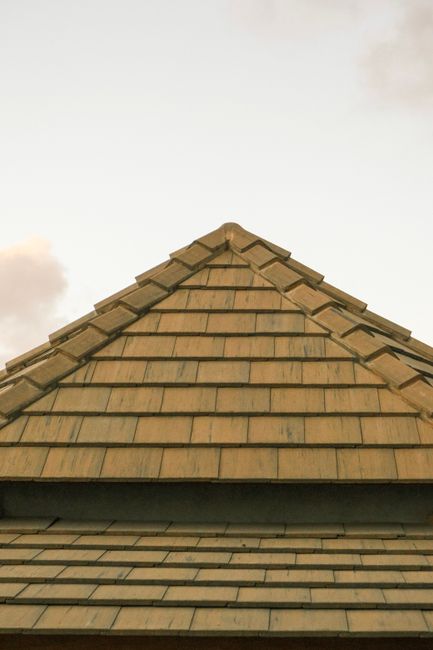
A ridge is the highest point of a sloped roof. A hip is an outside intersection where two roof slopes meet and continue downward toward the eaves. A valley is an inside intersection that collects and directs water. A gable is the triangular wall section beneath the meeting point of two roof slopes.
A roof with four sloping sides is generally called a hip roof. A roof with two sloping sides and triangular end walls is a gable roof. Many homes use combinations of both designs, along with smaller roof sections over additions, porches, dormers, or attached structures.
The shape matters because it affects drainage, ventilation, snow accumulation, and the number of areas that require flashing.
What do shingle terms such as granules, courses, and tabs mean?
Several basic terms describe how asphalt shingles are made and installed.
Granules are small mineral particles pressed into the surface of asphalt shingles. They provide color and help protect the shingle from ultraviolet light and weather. Granules may appear in gutters after installation or during normal aging, but large amounts of loose material can indicate deterioration.
A shingle tab is the visible lower portion of a traditional strip shingle. A course is a horizontal row of shingles. The exposure is the part of each shingle visible after the next course is installed.
Starter shingles are installed along the lower edge of the roof. They help seal the first course and create a proper beginning point for the shingle pattern.
A ridge cap is a specially shaped shingle or roofing piece installed over the roof ridge. It protects the highest seam and often forms part of the ventilation system.
What is flashing, and where is it used?
Flashing is a water-management material installed where roof surfaces meet other structures or change direction. It is commonly found around:
- Chimneys
- Plumbing vent pipes
- Skylights
- Roof-to-wall intersections
- Valleys
- Dormers
- Sidewalls and end walls
- Roof edges and transitions
Step flashing consists of individual pieces that overlap along a roof-to-wall intersection. Counterflashing is installed on a wall, masonry surface, or chimney to work with the base flashing below it.
A common misconception is that shingles alone should keep water out around a chimney or wall. These areas depend on layered flashing details because water can move sideways, collect in corners, or enter behind trim.
What are roof ventilation and soffit vents?
Roof ventilation allows warm, moist air to leave the attic and helps outside air enter. A typical balanced system uses intake vents near the eaves and exhaust vents near the ridge or upper roof.
Soffit vents are intake vents installed beneath the eaves. Exhaust ventilation may include:
- Ridge vents
- Box or static vents
- Gable vents
- Turbine vents
Ventilation is not the same as air sealing or insulation. If warm indoor air leaks into a cold attic, it can create condensation even when the roof has vents. Proper attic performance usually requires adequate insulation, controlled air sealing, and balanced intake and exhaust ventilation.
In colder weather, poor attic conditions can contribute to frost, damp insulation, mold growth, and ice dams.
What is an ice dam?
An ice dam is a ridge of ice that forms along a roof edge when snow melts on warmer upper roof sections and refreezes near the colder eaves. The ice can block drainage and allow water to move beneath shingles or into roof and wall assemblies.
Ice dams are more likely when attic heat escapes unevenly, snow remains on the roof, or roof edges are significantly colder than upper surfaces. They are not simply a shingle problem. Insulation, air leakage, ventilation, roof design, and weather conditions can all contribute.
Removing ice with sharp tools can damage shingles and create fall hazards. Large or persistent ice buildup may require specialized evaluation, particularly when water is appearing indoors.
What are roof penetrations and why do they matter?
A roof penetration is any object or opening that passes through the roof surface. Plumbing vents, chimneys, skylights, exhaust pipes, and certain electrical components are examples.
Every penetration requires a watertight transition. The surrounding shingles, flashing, seals, and underlayment must work together. Penetrations are common leak locations because they interrupt the continuous roof surface and may expand, contract, or deteriorate at different rates from nearby materials.
A ceiling stain does not always appear directly below the source. Water can travel along decking, rafters, insulation, or wall framing before becoming visible.
What do roof slope and pitch mean?
Roof slope describes how much a roof rises compared with how far it runs horizontally. Pitch is often used in everyday conversation to mean the same thing, although technical definitions can vary.
A low-slope roof sheds water more slowly and may require different materials or installation methods than a steep-slope roof. Steeper roofs generally shed rain and snow more quickly but can be more difficult and hazardous to access.
Roof slope also affects how much snow remains on a surface, how flashing is designed, and whether a material is suitable for that roof.
What is roof replacement versus roof repair?
A roof repair addresses a limited problem, such as damaged shingles, deteriorated flashing, or a localized leak. A roof replacement removes most or all of the existing roof covering and installs a new system.
Repair may be reasonable when damage is isolated and the surrounding materials remain serviceable. Replacement becomes more likely when problems are widespread, the roof covering has reached the end of its useful life, or moisture has affected large areas of decking or framing.
The age of the roof alone does not answer the question. Condition, installation quality, ventilation, weather exposure, previous repairs, and the extent of hidden damage all matter.
Which roofing terms describe warning signs?
Homeowners may encounter these terms when documenting roof conditions:
- Curling: Shingle edges or corners lift away from the roof.
- Buckling: Shingles develop visible waves or ridges.
- Blistering: Raised areas form in the shingle surface.
- Missing shingles: Entire shingles or sections are blown or torn away.
- Algae staining: Dark streaks or discoloration caused by biological growth.
- Moss growth: Plant growth that can retain moisture and lift shingle edges.
- Exposed fasteners: Nails or screws are visible where they may be vulnerable to water.
- Daylight through the roof: Light visible from the attic can indicate a gap or opening.
- Sagging: A roof plane or ridge appears uneven, which may indicate structural or moisture-related concerns.
In a snowy climate, roof observations should be made from the ground or attic whenever possible. Walking on icy, steep, or snow-covered roofing is hazardous and can damage the covering.
Why does this vocabulary matter?
Knowing terms such as flashing, underlayment, valley, decking, ventilation, and ice dam helps homeowners describe problems accurately and understand what a roofing report means. It also makes it easier to distinguish a visible symptom from the underlying cause.
A small stain, for example, may involve a failed pipe flashing, a blocked valley, an ice dam, or moisture entering through the attic. Clear terminology does not replace a detailed inspection, but it helps residents ask better questions and make more informed decisions about roof maintenance and safety.
