
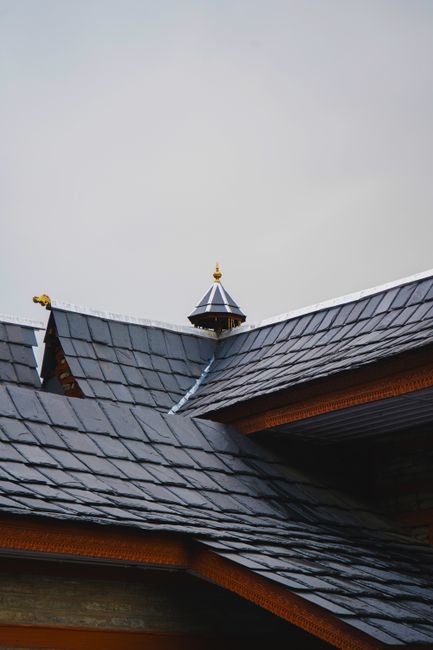
For homeowners comparing asphalt shingles and metal roofing, the better choice depends on more than appearance or expected lifespan. Snow, wind, ice, roof design, ventilation, installation quality, maintenance habits, and long-term budget all matter.
In Oswego, winter conditions deserve special attention. Lake-effect snow, drifting, freeze-thaw cycles, strong winds, and ice along roof edges can expose weaknesses in both roofing systems. Neither material is automatically right for every home.
Which roofing material handles local winters better?
Both asphalt shingles and metal roofing can perform well in this climate when properly selected and installed. Metal generally sheds snow more readily and resists moisture, while asphalt shingles are easier to repair and can provide dependable protection at a lower initial cost.
The roof’s structure matters just as much as the surface material. A roof must be designed to carry expected snow loads, and heavy snow can remain on either material if the roof has a low slope, valleys, dormers, roof penetrations, or sheltered areas where wind deposits snow.
Important winter considerations include:
- Proper underlayment beneath the roof covering
- Ice-barrier protection along vulnerable eaves
- Adequate attic ventilation
- Secure flashing around chimneys, walls, skylights, and plumbing vents
- Correct fastening for local wind and snow conditions
- A roof structure capable of carrying accumulated snow
A metal roof does not eliminate the need for these details.
What are the main advantages of asphalt shingles?
Asphalt shingles are familiar, widely available, and compatible with many types of homes. They are often the practical choice for homeowners seeking a conventional appearance and a moderate upfront cost.
Their main advantages include:
- Lower initial material and installation cost in many cases
- Many colors, profiles, and architectural styles
- Straightforward repair or replacement of damaged sections
- Broad availability of replacement materials
- Quieter performance than exposed metal during rain or hail when the attic is properly insulated
- Easier visual matching when adding an addition or repairing an older roof
Modern architectural shingles are thicker and more dimensional than older three-tab styles. However, not every shingle has the same resistance to wind, impact, algae growth, or temperature changes. Product ratings should be reviewed carefully rather than assuming that all asphalt shingles perform alike.
Asphalt shingles can be vulnerable to curling, granule loss, cracking, and wind damage as they age. Ice dams can also cause leaks if attic heat, ventilation, insulation, and roof-edge protection are not properly balanced.
What are the main advantages of metal roofing?
Metal roofing is valued for its long service life, resistance to moisture, and ability to shed snow on suitable roof slopes. It can be especially appealing for buildings where the owner expects to remain in the home for many years.
Potential advantages include:
- Long service life when the coating, fasteners, seams, and flashing remain in good condition
- Strong resistance to rot and moisture absorption
- Less risk of surface deterioration from repeated wetting and drying
- Good performance against wind when properly fastened
- Lower routine maintenance in some installations
- Ability to place a new roof over certain existing assemblies, where code and roof conditions allow
Metal roofing comes in several forms. Interlocking metal shingles look more similar to conventional roofing, while standing-seam panels have long vertical seams and a more distinct appearance. The differences affect cost, maintenance, repair methods, snow movement, and how the roof handles expansion and contraction.
Snow sliding from a metal roof can also create a safety concern. Snow guards may be appropriate above entrances, walkways, driveways, heat pumps, or areas frequently used by people. Without planning, a roof that sheds snow efficiently can create hazards at ground level.
Is metal roofing noisier than asphalt shingles?
Metal roofing can sound louder during rain or hail, but the final result depends heavily on the roof assembly. Attic insulation, roof decking, underlayment, and interior ceilings reduce sound transmission.
A metal roof installed over a solid deck with suitable underlayment may not seem dramatically louder than an asphalt roof from inside the home. A lightly framed structure or poorly insulated attic can make sound more noticeable.
Noise is therefore a design and installation issue, not a simple material comparison.
Which roof costs less?
Asphalt shingles usually have the lower upfront cost, but the total cost over time can be more complicated. A less expensive roof may require replacement sooner, while a higher-cost metal roof may last longer if its coating, fasteners, seams, and flashings remain sound.
Homeowners comparing prices should look beyond the square-foot rate. Important cost factors include:
- Removal and disposal of the existing roof
- Deck repairs
- Ice-barrier and underlayment requirements
- Flashing replacement
- Roof pitch and complexity
- Dormers, valleys, chimneys, and skylights
- Snow guards or snow retention systems
- Attic ventilation improvements
- Whether the roof can legally and structurally be installed over an existing layer
A metal roof is not automatically the cheaper option over its entire life, and asphalt shingles are not automatically a poor long-term value. The expected time of ownership often changes the calculation.
Which material is easier to repair?
Asphalt shingles are generally easier to patch because individual damaged shingles can often be replaced with matching pieces. Exact color matching may become difficult when the existing roof has faded or the original product is no longer available.
Metal repairs depend on the system. A damaged panel, loose fastener, failed seam, or corroded flashing may require specialized replacement methods. Patching a metal roof with an incompatible sealant can create a temporary appearance of repair without addressing movement, drainage, or corrosion.
Branches, falling ice, ladders, and maintenance work can damage either type of roof. Metal may resist some impacts better, but a dented panel can be more difficult to blend visually than a replaced shingle.
Does roof color affect performance?
Roof color can affect how quickly the surface warms and cools, although attic insulation and ventilation usually have a greater effect on indoor comfort. Dark asphalt shingles and dark metal panels may absorb more solar heat than lighter colors.
In a cold, snowy climate, homeowners should focus less on color alone and more on:
- Proper attic insulation
- Clear ventilation paths
- Air sealing around penetrations
- Moisture control
- Correct flashing
- The roof’s slope and drainage design
A roof that warms unevenly because of poor attic ventilation may contribute to ice-dam conditions regardless of the covering material.
What should homeowners inspect before choosing?
The existing roof should be evaluated as a complete system rather than judged only by surface appearance. A new covering will not correct a sagging deck, inadequate ventilation, poor drainage, or deteriorated flashing.
Before choosing a material, consider:
- Roof age and previous repairs
- Evidence of leaks or stained decking
- Sagging ridges or roof planes
- Attic moisture or frost
- Ice buildup along eaves
- Snow accumulation in valleys
- Condition of chimneys, vents, and wall intersections
- Whether gutters and downspouts can handle roof runoff
- Whether the roof structure has been altered or heavily loaded
Building-code requirements also apply to roof coverings, underlayment, wind resistance, snow loads, and ice barriers. Structural concerns, active leaks, unstable roof areas, or unsafe snow and ice should be addressed by a qualified roofing or building professional rather than handled from a ladder.
Which one is better for a typical home?
Asphalt shingles may make more sense for a homeowner prioritizing lower initial cost, conventional appearance, easy repairs, and broad material availability.
Metal roofing may make more sense for a homeowner prioritizing long service life, moisture resistance, reduced surface maintenance, and snow-shedding potential—provided the roof design includes safe snow management.
The most dependable choice is the material that matches the home’s structure, roof slope, ventilation, drainage, winter exposure, and expected ownership period. In Oswego, NY, good detailing around ice, snow, flashing, and ventilation is usually more important than choosing a material based on appearance alone.
