
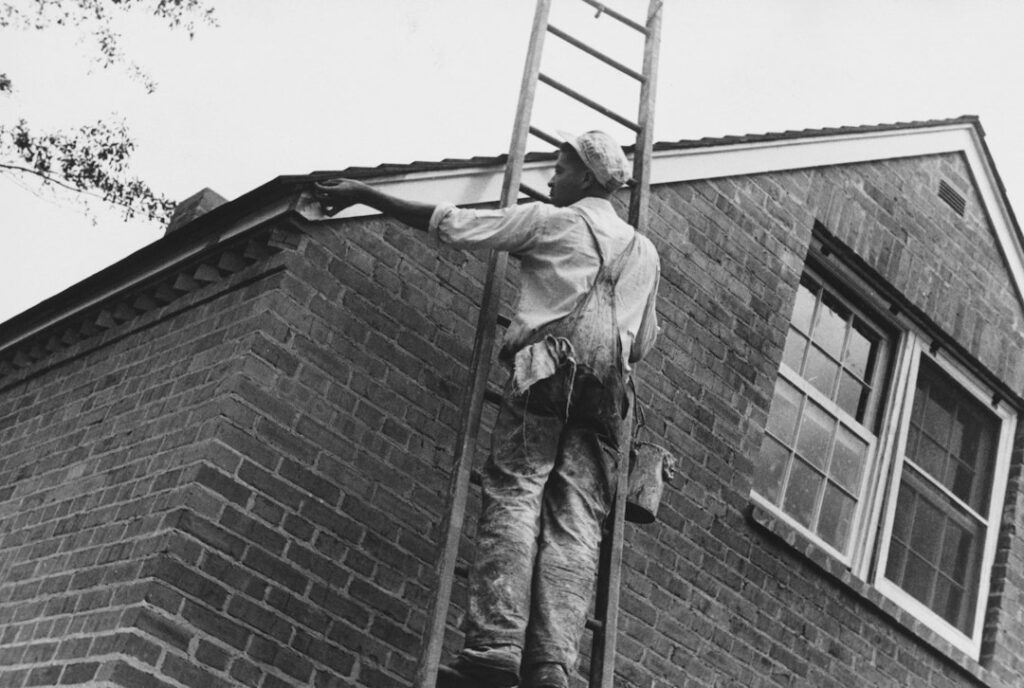
Hanging lights along a roofline can make a home look welcoming, but the work combines ladders, electricity, weather exposure, and a surface that may be difficult to walk on safely. In Oswego, NY, winter moisture, lake-effect snow, ice, and gusty conditions make timing and setup especially important.
The safest approach is to keep as much work as possible at ground level, use attachments designed for the edge of the roof or gutter, and avoid climbing onto the roof unless the surface is dry, stable, and suitable for foot traffic.
Is it safe to stand on the roof to hang lights?
Usually, roof access is not necessary for ordinary light installation. Most roofline decorations can be placed from a properly positioned ladder or from the ground using an extension tool.
Walking on a roof creates fall and roof-damage risks that are easy to underestimate. Asphalt shingles can become slippery from dew, frost, algae, or light moisture. They may also be damaged by repeated foot traffic, especially near edges, valleys, flashing, skylights, and older areas where the surface has become brittle.
Do not climb onto the roof when:
- Snow, frost, rain, or ice is present
- Wind makes the ladder or light strands difficult to control
- Shingles are damp, loose, curled, or visibly deteriorated
- The roof is steep, unusually high, or difficult to reach
- You would need to step near an unprotected edge
- The work requires carrying bulky materials while climbing
If the installation cannot be completed without walking on a steep or fragile roof, the safest choice is to use a different decorating plan rather than improvise fall protection.
What should be checked before hanging lights?
Inspect both the roof edge and the lights before setting up a ladder. A light display should never be used to hide a roof problem or attached to a component that is already loose.
Look for:
- Loose or sagging gutters
- Missing, cracked, or lifted shingles
- Exposed nails or sharp metal edges
- Damaged fascia, soffit, or trim
- Weak branches near the planned ladder position
- Overhead electrical wires
- Downspouts or icy areas that could interfere with footing
Use only light strands and extension cords marked for outdoor use. Discard cords with cracked insulation, exposed conductors, bent plugs, scorch marks, or loose sockets. Check that the strand has the correct fuse or overcurrent protection and that connections are firmly seated.
Outdoor decorations should be protected by ground-fault circuit-interrupter protection. A GFCI can shut off power when it detects current leaking through an unintended path, which is particularly relevant around wet ground, snow, and damp exterior surfaces.
How should a ladder be positioned?
A ladder should sit on firm, level ground and face the work area directly. Never place it on snow, ice, boxes, buckets, loose soil, or a sloped surface to gain extra height.
For an extension ladder, the base should generally be positioned about one foot away from the wall for every four feet of ladder height up to the support point. The ladder should extend above the roof edge or upper landing enough to provide a secure handhold when stepping off, but stepping onto the roof should still be avoided unless the entire access plan is safe.
Follow these basic practices:
- Face the ladder while climbing and descending.
- Keep two hands and one foot, or two feet and one hand, in contact whenever possible.
- Keep your body between the side rails.
- Use a tool belt, bucket, or hand line instead of carrying materials in your hands.
- Do not stand on the top cap or the highest prohibited steps of a stepladder.
- Have another adult stabilize the ladder when conditions or height make it appropriate.
- Keep people, pets, and movable objects away from the ladder base.
A ladder should not be shifted while someone is standing on it. If the work area cannot be reached without leaning far to either side, climb down and reposition the ladder.
What is the safest way to attach the lights?
Use lightweight plastic clips or hangers made for the type of edge being decorated. Clips that grip the gutter lip, fascia edge, or shingle edge are generally less damaging than nails, staples, or screws.
Avoid attaching lights by:
- Driving nails or staples through shingles
- Puncturing flashing or waterproof membranes
- Drilling into gutters
- Clamping tightly around electrical cords
- Placing fasteners where they can block drainage
- Pulling strands tight enough to bend gutters or trim

Lights should hang with a small amount of slack rather than being stretched tightly between attachment points. Gentle spacing helps reduce strain when wind moves the strand. It also prevents the weight of one section from pulling against a single clip.
Do not use a gutter as a climbing support. Gutters are designed to move water, not to hold a person’s weight, ladder pressure, or heavy decorations.
How can wind, snow, and ice affect roof lights?
Weather is a major concern in the local area. Lake-effect snow and winter storms can place additional weight on light strands, clips, gutters, and roof-edge trim. Wind can make strands whip against shingles, siding, windows, and metal flashing.
Before installing, consider whether the display will remain in place through several days of changing conditions. Leave enough clearance around downspouts so melting snow and rainwater can drain normally. Do not allow cords to rest in puddles, packed snow, or areas where snow removal equipment may catch them.
After a storm, inspect the display from the ground. Turn the lights off before touching or adjusting anything. Look for sagging strands, detached clips, damaged insulation, fallen branches, and ice buildup. Do not climb up to repair decorations during or immediately after a storm.
How should outdoor lights be connected?
Connect only the number of light strands allowed by the manufacturer’s instructions. More connections are not automatically safer simply because the lights appear to be operating normally.
Use these precautions:
- Keep plug connections elevated and protected from standing water.
- Do not run cords through doors or windows where they can be pinched.
- Keep cords away from hot surfaces, sharp edges, snow shovels, and vehicle paths.
- Use outdoor-rated covers where connections are exposed to precipitation.
- Do not overload an outlet, power strip, or extension cord.
- Turn lights off before going to bed or leaving the home unless an appropriate timer is being used.
- Unplug the display before replacing bulbs, moving clips, or clearing nearby snow.
A timer can reduce operating time, but it does not replace inspection. Cords and connections still need to be checked periodically.
When should the project be stopped?
Stop immediately if the ladder shifts, the ground becomes slippery, wind increases, or you notice damaged electrical equipment. A light installation is not worth continuing through unsafe conditions.
Extra caution is also needed around power lines. Keep ladders, poles, light strands, and your body well away from overhead wires. Never assume an insulated-looking wire is harmless, and never use a metal ladder near electrical conductors.
If the roof edge, ladder position, or electrical setup creates a fall or shock hazard that cannot be controlled from the ground, do not proceed. Choosing decorations that can be installed from a stable surface is often the safest solution for the home and the roof itself.
